Click images to go the publishers’ websites for more information
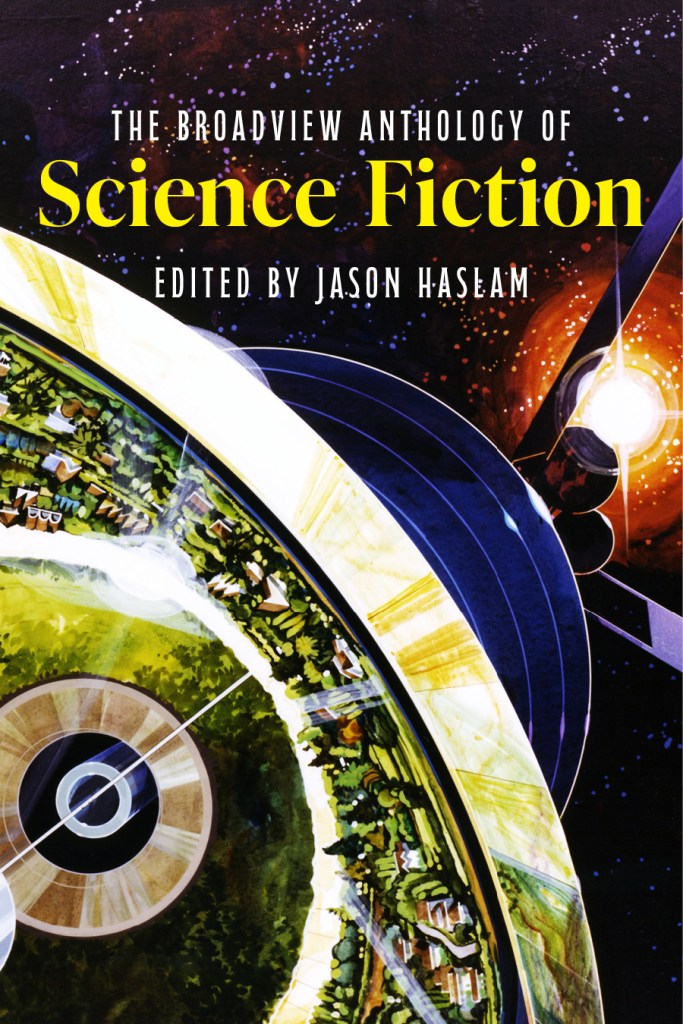
The Broadview Anthology of Science Fiction, edited by Jason Haslam (2025)
The Broadview Anthology of Science Fiction takes a “broad view” of science fiction in terms of its histories, themes, forms, and communities. Covering over 200 years, the anthology focuses on short fiction, but also includes comic strips, images, and speculative poetry. It also recognizes the wide range of futurist and SF traditions, including Afrofuturism, Indigenous Futurisms, Feminist SF, and more. Fully annotated with information about authors and texts as well as full explanatory notes, the anthology also includes an introduction that discusses the many competing definitions of—and methods of studying—science fiction, as well as offering an historical and cultural overview of the genre.
Key Features
- Fully annotated, with author notes, explanatory notes, and an introduction designed for classroom use
- Includes speculative poetry
- Includes canonical works as well as lesser-known material, some anthologized here for the first time
- Multiple tables of contents provide different routes and connections through the texts
- Includes illustrations and images
To see the chronological Table of Contents and other information, click through to Broadview’s site, here.
Gender, Race, and American Science Fiction: Reflections on Fantastic Identities (Routledge, 2015)
Honourable Mention, 2015 Robert K. Martin Prize for Best Book, offered by the Canadian Association for American Studies
Read part of the introduction here (click on “preview pdf”)
Now available in paperback (2018)
Table of Contents
Introduction: “Kindred Mysteries”: The Fantastic Identities of SF
Part I: Race/Gender/Science/Fiction
Chapter One: “The races of mankind”: The Race of Gender in “The Birth-mark” and Mizora
Chapter Two: The Whiteness of Manly Pulp from Tarzan’s Jungle to Buck Rogers’ Phalectrocentrism
Part II: Virtual Whiteness
Chapter Three: The Möbius Strip of Identity and Privilege in Black No More
Chapter Four: Coded Discourse: Romancing the (Electronic) Shadow in The Matrix
Part III: Muting Utopia
Chapter Five: Bridging Divides in The Santaroga Barrier and All Tomorrow’s Parties
Chapter Six: Octavia Butler’s Exceptional Minds, Collective Identities, and the Moynihan Report
Afterword: The Robot’s Howl: SF as Death Drive
Fitting Sentences: Identity in Nineteenth- and Twentieth-Century Prison Narratives (UTP, 2005)
Table of Contents
Opening Statements
Part I: The Carceral Society
Chapter 1: “They locked the door on my meditations”: Thoreau, Society, and the Prison House of Identity
Chapter 2: “Cast of Characters”: Problems of Identity and Incidents in the Life of a Slave Girl
Part II: Writing Wrongs
Chapter 3: “To be entirely free, and at the same time entirely dominated by law”: The Paradox of the Individual in De Profundis
Chapter 4: Positioning Discourse: Martin Luther King, Jr.’s “Letter from Birmingham City Jail”
Part III: Prisons, Privilege, and Complicity
Chapter 5: Being Jane Warton: Lady Constance Lytton and the Disruption of Privilege
Chapter 6: Frustrating Complicity in Breyten Breytenbach’s The True Confessions of an Albino Terrorist
Closing Statements / Opening Arguments
Thinking Popular Culture. 1st ed. (Textbook; Pearson 2015)
Brief Table of Contents
Preface for Students xii
Preface for Instructors xiv
Part I Reading Popular Culture
Chapter 1 Thinking Popular Culture?
Chapter 2 The Study of Culture
Part II Cultural Theories: Beginnings
Chapter 3 Marxism I: Ideology, Hegemony, and Class
Chapter 4 Psychoanalysis I: Freud and Jung
Chapter 5 Linguistics and Semiotics
Part III Cultural Theories: Developments
Chapter 6 Marxism and Psychoanalysis II: Forming Identity
Chapter 7 Disciplining Cultural Studies
Chapter 8 History, Power, Discourse
Chapter 9 Postmodernism and Poststructuralism
Part IV Cultural Theories: Identities
Chapter 10 Feminism and Gender Studies
Chapter 11 Sexuality and Queer Theory
Chapter 12 Race, “Race,” and Racism
Chapter 13 Nationalism, Imperialism, and (Post)Colonialism
Part V Writing About Popular Culture
Chapter 14 Writing about Popular Culture across the Disciplines
Chapter 15 Opinion, Analysis, Evidence, Theory
Chapter 16 Sample Assignments
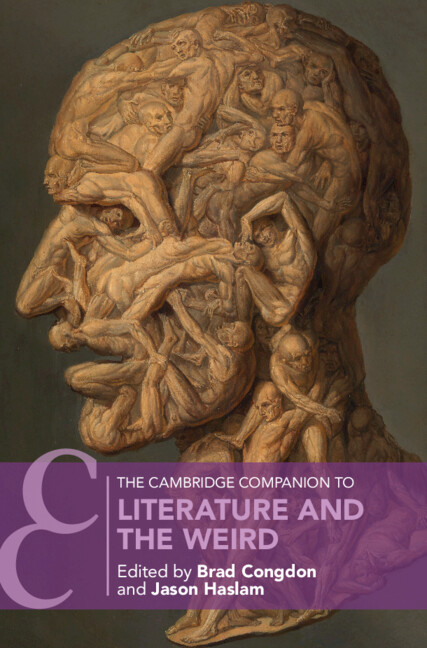
The Cambridge Companion to Literature and the Weird, edited by Brad Congdon and Jason Haslam (2027)
The Weird-a transgressive mode of fiction redolent with ooze, tentacles, and unfathomable geometries-has proven to be one of the most influential genres of the past century, despite being one of the most difficult to define. This volume charts the development of the Weird, from its origins in the nineteenth and early twentieth centuries (drawing connections to both popular, pulp fiction and ‘high’ Modernism) to the New Weird of today and related global forms. Leading scholars explore this troubling genre, offering global perspectives that go beyond the narrow frame of Euro-American fiction, to include works from Africa, Asia, and Scandinavia, as well as Indigenous voices, and ranging from novels and magazines to movies and games. The Cambridge Companion to Literature and the Weird is both a comprehensive history and a broad reimagining of the field, perfect for general readers, undergraduate researchers, and scholars of the form.
Table of Contents
Introduction (Brad Congdon and Jason Haslam)
Part I: Weird Origins and Resurgences
Chapter 1: The Old Ones: Precursors to the Weird (Roger Luckhurst)
Chapter 2: H. P. Lovecraft and the Cosmic Weird (Xavier Aldana Reyes)
Chapter 3: The Lovecraft Circle and Weird Pulp (Brad Congdon)
Chapter 4: Modernist Weird, Weirding Modernism: Unnamables in Lovecraft and Beckett (Timothy S. Murphy)
Chapter 5: Rise of the New Weird (Betsy Huang)
Part II World-Wide “Weird”
Chapter 6: Indigenous Weird (Krista Collier-Jarvis)
Chapter 7: African Weird (Ian P. MacDonald)
Chapter 8: Transgressing Humanity’s Centrality: Weird Objects in Three Latin American Short Stories (Antonio Alcalá González)
Chapter 9: Nordic Weird (Hanna Samola)
Chapter 10: The Weird, the Strange, and the Gothic: Twenty-First-Century Asian Speculative Fiction and the Call of the Weird (Katarzyna Ancuta)
Part III Weird Media
Chapter 11: Weird Games (Chloé Wake)
Chapter 12: Weird Film and Television (Steen Ledet Christiansen)
Chapter 13: Weird Comics (Dragoş Manea)
Part IV Weird Themes and Theories
Chapter 14: EcoWeird (Dennis Denisoff)
Chapter 15: Race and the Weird (Maisha Wester)
Chapter 16: Gender Weird/Gender Trans and Queer (Ardel Haefele-Thomas)
Chapter 17: Disability and Bodies in the Weird (Laura R. Kremmel)
American Gothic Culture: An Edinburgh Companion, edited by Joel Faflak & Jason Haslam (Edinburgh UP, 2016)
Now available in paperback (2017)
Table of Contents
Introduction (Joel Faflak and Jason Haslam)
Part I: Gothic Histories, Gothic Identities
Gothic Monstrosity: Charles Brockden Brown’s Edgar Huntly and the Trope of the Bestial Indian (Christine Yao)
Slavery and American Gothic: The Ghost of the Future (Jason Haslam)
Ethno-gothic: Repurposing Genre in Contemporary American Literature (Arthur Redding)
Part II: Gothic Genres, Gothic Sites
Southern Gothic (Christopher Lloyd)
The Devil in the Slum: American Urban Gothic (Andrew Loman)
Joyce Carol Oates Revisits the Schoolhouse Gothic (Sherry R. Truffin)
Part III: Gothic Media
American Gothic Television (Julia M. Wright)
American Gothic Art (Christoph Grunenberg)
Doppelgamers: Video Games and Gothic Choice (Michael Hancock)
Part IV: American Creatures
Screening the American Gothic: Celluloid Serial Killers in American Popular Culture (Sorcha Ní Fhlainn)
American Vampires (Jeffrey Andrew Weinstock)
Consumed out of the Good Land: The American Zombie, Geopolitics and the Post-War World (Linnie Blake)
The Public Intellectual and the Culture of Hope, edited by Joel Faflak & Jason Haslam (UTP, 2013)
Table of Contents
Foreword (John Polanyi; Nobel Prize Winner in Chemistry)
Introduction: “Public Hopes” (Joel Faflak and Jason Haslam)
Part One: Public Readings
“Maga-Scenes: Performing Periodical Literature in the 1820s” (Angela Esterhammer)
“‘A Wicked Whisper’: Censorship and Affect in Coleridge’s “˜The Rime of the Ancyent Marinere’” (Julia M. Wright)
“Sense and Sensibility: Anatomies of Hope in Romantic-Century Medical Pedagogy” (James Robert Allard)
“‘I know the difference between what I see and what I only want to see’: Remembering India’s Partition through Children in Cracking India” (Nandi Bhatia)
Part Two: Public Performances
“Margaret Cavendish’s Civilizing Songs” (Katherine R. Larson)
“Get Happy! American Film Musicals and the Political Technology of Utopianism” (Joel Faflak)
“To Be (Or Not To Be): Ernst Lubitsch’s Irrepressible Theatrical Liberalism” (Andrea Most)
“Inglourious Criticism, Basterd Fantasies: Rancière, Tarantino and the Intellectual Spectacle of Hope” (Jason Haslam)
Part Three: Public Matters
“Beyond the Book: Reading as Public Intellectual Activity” (Daniel Coleman)
“The Political Nature of Things: David Suzuki and the Canadian Public” (Imre Szeman)
“The Immaterial Matters” (R. Darren Gobert)
“Higher Education and the End(s) of Time (Patrick Deane)
Captivating Subjects: Writing Confinement, Citizenship, and Nationhood in the Nineteenth Century, edited by Jason Haslam & Julia M. Wright (UTP, 2005)
Now available in paperback (2020)
Table of Contents
Introduction (Jason Haslam & Julia M. Wright)
I. The Subject of Captivity
“Being Jane Warton: Lady Constance Lytton and the Disruption of Privilege” (Jason Haslam)
“Form and Authority in Russian Serf Autobiography” (John MacKay)
“I, hereby, vow to Read Equiano’s Interesting Narrative” (Tess Chakkalakal)
II. Captivating Discourses: Class and Nation
“‘From the slums to the slums’: The Delimitation of Social Identity in Late Victorian Prison Narratives” (Frank Lauterbach)
“‘Stone Walls Do (Not) a Prison Make’: Fact and Fiction in Nineteenth-Century Literary and Non-Literary Representations of Imprisonment” (Monika Fludernik)
“‘National Feeling’ and the Colonial Prison: Teeling’s Personal Narrative” (Julia M. Wright)
III. Captivating Otherness
“A Nation in Chains: Barbary Captives and American Identity” (Jennifer Costello Brezina)
“A Prison Officer and a Gentleman: the Prison Inspector as Imperialist Hero in the Writings of Major Arthur Griffiths (1838-1908)” (Christine Marlin)

Casino Royale, by Ian Fleming, edited (with an introduction, notes, and appendices) by Jason Haslam and Julia M. Wright (Broadview, 2020)
The introduction to this edition of the original 1953 novel covers the following:
The Spy in Fiction before WWII
Bond in History: From WWII to the Cold War
The History of Bond: Popular Culture and the End of History
A Chronology of Ian Fleming: His Life and Times
Appendices include:
Other Works by Ian Fleming (incl. fiction and non-fiction)
Tales of International Intrigue before Bond
Secret Intelligence and Historical Documents

Tarzan of the Apes, by Edgar Rice Burroughs, edited (with an introduction, notes, and appendices) by Jason Haslam (Oxford World’s Classics, 2010)
Originally published in cloth and paperback.
The introduction to this edition of the original 1914 novel covers the following:
Burroughs of (and beyond) the Apes
Tarzan of the Novel
Tarzan, Africa, and Race
Tarzan, Nature, and Civilization
Tarzan’s Literary and Cultural Relations
Tarzan’s Afterlife
Appendices include:
Readers’ Letters to the 1912 magazine publication
selections from Stanley’s In Darkest Africa
The story of the feral child, “Peter the Wild Boy”
selections from Emerson’s “Self-Reliance”
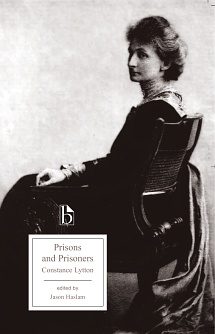
Prisons and Prisoners: Some Personal Experiences, the autobiography of British suffragette Constance Lytton edited (with an introduction, notes, and appendices) by Jason Haslam (Broadview, 2008)
The introduction to this edition covers the following:
The Life of Constance Lytton
Women’s Suffrage, Militancy, and the WSPU
Suffrage and the Prison
Writing Prison(ers)
The Life of Jane Warton
The Literary Afterlife of Jane Warton
Appendices include:
Glossary of Names
Other Suffragette Writings by Constance Lytton
Suffrage Material Concerning Lytton
Reviews of Prisons and Prisoners
Material Concerning Suffragettes and Prison
Photographs and Suffragette Cartoons
